 By
By How Native Advertising Blends Content With Brand Promotion
Digital media consumption has evolved rapidly, fundamentally altering how audiences interact with commercial messaging. Traditional display banners and intrusive pop-up ads once dominated the web, but modern users have developed an acute resistance known as banner blindness. Viewers naturally scan past flashing sidebars, auto-playing video units, and disruptive overlays to find the editorial content they actually came to read.
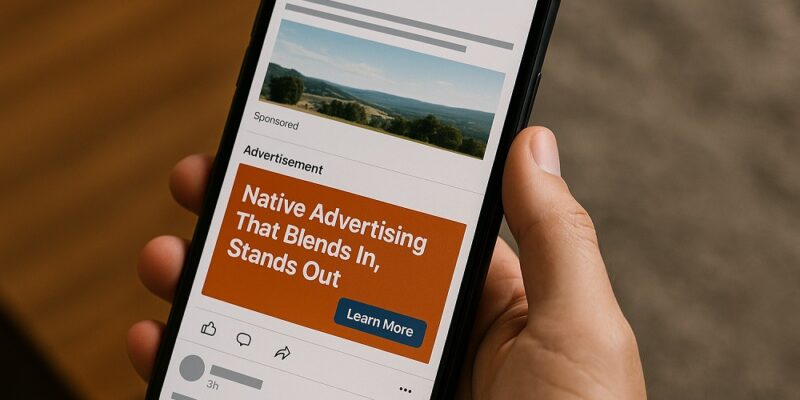
To overcome this fatigue, brands have increasingly turned to native advertising. By mirroring the form, feel, and function of the media platform on which it appears, native advertising embeds promotional messaging directly into the user natural browsing flow. Rather than disrupting the reading or viewing experience, native campaigns provide real editorial value while advancing clear business objectives.
Defining Native Advertising
Native advertising is a paid marketing discipline where the visual presentation, editorial tone, and user interface match the surrounding organic content of the publishing platform. Unlike standard programmatic display ads that stand apart from a webpage layout, native units look like authentic editorial pieces, social media posts, search engine results, or suggested recommendations.
The primary objective of native advertising is not to deceive the consumer, but to eliminate friction. When a promotion shares the structural DNA of the host site, users engage with the material with the same curiosity and attention they give to non-sponsored journalism.
The core mechanics of native advertising rest on key pillars:
-
Visual Cohesion: Native units use the identical typography, color palettes, thumbnail proportions, and grid structures as the host site.
-
Contextual Relevance: The subject matter aligns directly with the editorial themes of the surrounding publication, ensuring the content matches reader expectations.
-
Editorial Value: The sponsored piece provides educational, analytical, or entertaining information rather than functioning as a direct hard-sell pitch.
-
Transparent Disclosure: Clear labeling, such as sponsored content, promoted post, or paid partner, maintains consumer trust and complies with regulatory standards.
The Core Formats of Native Advertising
Native advertising takes several distinct forms depending on the hosting platform, distribution channel, and campaign goals.
Sponsored and Branded Content
Sponsored content, often produced in collaboration with a publication custom studio, represents the most comprehensive format of native marketing. These in-depth articles, interactive infographics, or mini-documentaries live directly within a major news or lifestyle publication.
-
Thought Leadership Articles: High-level executives publish analytical pieces examining industry trends, establishing authority without overtly promoting a single product.
-
Deep-Dive Case Studies: Brands tell real-world stories about complex problems solved through innovative methods, providing actionable takeaways for readers.
-
Interactive Media Modules: Custom-built data visualizations, quizzes, and calculators engage audiences while subtly framing a brand as an indispensable resource.
In-Feed Editorial and Social Units
In-feed units appear directly inside the main chronological or algorithmic scroll of social networks, news feeds, and content aggregation apps.
-
Social Media Promoted Feeds: Posts on platforms like LinkedIn, Instagram, and X appear alongside updates from friends and industry peers, featuring identical layout elements such as like buttons, comment fields, and share icons.
-
News Feed Placements: Major digital newspapers insert sponsored articles directly into section homepages, positioned alongside daily headlines.
-
Short-Form Video Streams: Video platforms seamlessly queue sponsored narrative clips between organic user creations without disrupting the playback loop.
Content Recommendation Widgets
Typically located at the bottom of news articles, recommendation widgets display discovery feeds under labels such as recommended for you or around the web.
-
Traffic Amplification: These grids link readers to external editorial assets, driving high volumes of top-of-funnel traffic to branded content hubs.
-
Algorithmic Personalization: Recommendation engines evaluate a user reading history to surface sponsored articles matching their specific interests.
-
Cross-Publisher Distribution: Brands distribute a single piece of content across hundreds of high-authority publisher domains simultaneously.
Paid Search and Promoted Listings
Search engines and e-commerce platforms deploy native structures to connect consumer intent with commercial solutions.
-
Search Engine Ads: Text-based search results match the exact layout, font, and snippet formatting of organic search listings, designated only by a small sponsored marker.
-
E-Commerce Placement: Marketplaces position sponsored product listings at the top of category pages, using identical image sizes, rating systems, and pricing fonts as organic items.
Why Native Content Outperforms Traditional Display Advertising
The transition from traditional banner ads to native formats is supported by clear psychological and behavioral advantages.
-
Elimination of Cognitive Resistance: Traditional ads force users to stop what they are doing, triggering an immediate impulse to close or ignore the ad. Native units integrate into the existing consumption path, reducing cognitive fatigue.
-
Higher Engagement and Dwell Time: Readers spend almost the exact same amount of time viewing native sponsored articles as they do reading standard editorial stories, creating deeper message retention.
-
Enhanced Mobile Usability: On small smartphone screens, banner ads often break page layouts or get accidentally clicked. Native units scale responsively within mobile feeds, delivering a smooth reading experience.
-
Resistance to Ad Blockers: Because native placements rely on direct publisher integrations and standard content content-delivery frameworks, they are far less vulnerable to programmatic ad-blocking software.
Crafting High-Performing Native Campaigns
Executing a successful native advertising campaign requires a balance between creative journalism and strategic performance marketing.
The creative team must first thoroughly analyze the tone, vocabulary, and intellectual depth of the target publication. An article written for a financial journal demands rigorous data, expert quotes, and formal business terminology. Conversely, content built for a lifestyle outlet requires approachable storytelling, conversational language, and dynamic visuals.
Marketers must focus eighty percent of the content on solving a real problem for the reader, leaving the final twenty percent for brand positioning. If an article immediately launches into a product sales pitch, readers will bounce, eroding the authenticity that made the native format effective in the first place.
Ethical Standards, Disclosure, and Consumer Trust
The line between seamless integration and deliberate deception is thin. Deceptive advertising destroys brand reputation and invites severe regulatory action.
Consumer protection bodies, such as the Federal Trade Commission in the United States, enforce strict guidelines requiring native advertisements to be immediately distinguishable from organic editorial content. Labels must be prominent, high-contrast, and unambiguous.
Using vague terms such as presented by or partnered with without clear visual distinctions can confuse readers. Brands and publishers must ensure that disclosures appear prominently before the user clicks a link and remain visible at the top of the destination article. When native advertising is executed with complete transparency, consumers appreciate the value of the information without feeling misled.
Measuring the True Impact of Native Campaigns
Because native advertising lives at the intersection of brand awareness and direct response, measurement frameworks must look beyond basic impressions.
-
Scroll Depth and Read Time: Evaluating how far down the page a reader navigates confirms whether the audience actually consumed the written narrative.
-
Earned Media and Social Sharing: Highly engaging native pieces often get shared organically across social channels, generating bonus visibility without additional ad spend.
-
Brand Lift Studies: Surveying exposed and unexposed audiences reveals shifts in brand perception, message association, and purchase intent.
-
Downstream Conversions: Tracking post-read behavior through attribution modeling helps marketers measure newsletter sign-ups, whitepaper downloads, and eventual sales pipeline influence.
The Future of Native Advertising
As digital environments evolve, native advertising will expand into spatial computing, artificial intelligence interfaces, and immersive audio environments. Sponsored segments in conversational podcasts and contextual product placements inside interactive virtual spaces represent the next phase of this strategy.
Regardless of the platform, the core premise of native advertising remains constant. Brands that respect the user environment, prioritize compelling storytelling, and deliver tangible value will continue to capture attention in an increasingly crowded media ecosystem.
Frequently Asked Questions
How does native advertising differ fundamentally from content marketing?
Content marketing is an umbrella strategy focused on creating and owning valuable media assets on a brand proprietary channels, such as a company blog or YouTube channel. Native advertising is a paid distribution method used to place that valuable content directly onto third-party publisher platforms to reach new audiences.
What is the difference between an advertorial and modern native advertising?
An advertorial is an older print concept where an ad was formatted to look like a magazine page, often using dense promotional sales copy. Modern native advertising focuses heavily on genuine digital editorial standards, mobile-first responsive design, interactive elements, and objective storytelling that provides standalone educational value.
How do publishers prevent native ads from damaging their editorial credibility?
Reputable publishers establish strict firewalls between their independent newsrooms and their custom content studios. They maintain rigorous quality guidelines for sponsored submissions, reject misleading claims, and use clear, persistent disclosure labels so readers always know the commercial origin of the material.
Can business-to-business brands benefit from native advertising as effectively as consumer brands?
Yes. Business-to-business organizations frequently achieve exceptional results with native advertising by placing sponsored thought leadership essays, detailed industry whitepapers, and operational case studies inside specialized trade publications and professional networks like LinkedIn.
What are the most common mistakes brands make when launching their first native campaign?
The most frequent mistake is producing an overt sales pitch disguised with a headline, rather than creating genuinely informative editorial content. Other common errors include neglecting the tone of the host publication, using weak disclosure labels, and measuring success solely through short-term click volume rather than total read time and brand lift.
How do programmatic native ad networks operate across multiple websites?
Programmatic native platforms use automated algorithms to match creative assets, such as headlines, descriptions, and thumbnail images, with available native inventory across thousands of partner websites. The network automatically adapts the typography and layout of the creative to fit each individual publisher interface in real time.
Are click-through rates higher on native ads compared to standard display banner ads?
Yes. Industry benchmarks consistently demonstrate that native ad units generate significantly higher click-through rates than standard banner ads, often outperforming traditional display placements by multiple times due to their contextual relevance and seamless visual integration.
What is your reaction?
Excited
0
Happy
0
In Love
0
Not Sure
0
Silly
0